掌握最新动向
快来领取属于你的城堡!
领取额外独特建筑“中世纪城堡”!只需在游戏内关联 Paradox 账号,即可在“公园与休闲”建造菜单中放置这座城堡。立即注册,或使用现有账号登录。
立刻登记并掌握第一手新闻&更新
订阅即表明您同意接收 Paradox Interactive 的资讯和特惠信息。

Hello Mayors!
Previously, in the world of City Corners, we talked about our next patch and what kind of changes you can expect from the upcoming update, which will arrive in mid-September. Naturally, City Corner #11 was followed by a bunch of questions from you, and after seeing some of the same questions pop up, we thought: “Why not put the answers somewhere where everyone can easily find them?”
So, that’s what we are doing today! While we wait a little longer for the release of our next patch, we have gathered some of the hottest topics and questions in one place, along with the answers to help clear things up. This time, we are mostly focusing on general improvements and simulation, but if there is a specific area you would like to hear more about or answer questions on in the future, let us know!
Now, this is a chunky one, so let’s dig in!
As many of you might know, Cities: Skylines II is not an easy cookie to crack; there are many things that we’d like to improve. While community feedback plays a huge part in this, making the decisions on what to improve next isn’t quite as simple. Oftentimes we cannot pick the most-requested suggestions and put them straight into the next patch; we also have to consider bugs, how different systems interact with each other, and what can realistically be tackled at a given time.
Our approach is generally to first make sure that the systems we already have are working as intended and are understandable to the player. From there, we can look at balancing, improvements, and giving players more control where it makes sense. We also keep track of community suggestions internally, so even if something is missing from City Corners or Patch Notes, it certainly does not mean that it has been forgotten!
This is also the reason why we don’t always jump straight into a major rework. Take logistics, as an example: the team often starts by fixing the underlying issues, then looks at how the system behaves afterward before deciding whether further balancing or larger changes are needed. In other words, fixing something doesn’t always mean that we are at the finish line; sometimes it is just the beginning.
Simulation is one of the biggest talking points whenever we release a City Corner, and understandably so. Usually, when we look at a problem in the simulation, it might look simple from the outside. However, more often than not, this issue turns out to be connected to several other parts of the simulation.
A good example of this, once again, is logistics. When looking at issues such as companies that are struggling to get the resources that they need, the first step is to identify whether there is an actual bug, and then see how the system behaves once that has been addressed. Is the company making the wrong decision? Is the resource unavailable? Is the vehicle choosing a route that is inefficient? These questions are the reason why our approach is often to start with the underlying issues, then observe how the simulation behaves after that.
From that point on, we can look at balancing and determine whether larger changes are needed. Of course, not every problem needs a complete rework, and sometimes it is better to see how a smaller change affects the simulation before making bigger adjustments. We know that that approach isn’t always the most satisfying answer, especially when you are waiting for something to improve, but taking the time to understand the systems we are changing helps us to avoid creating new problems while trying to solve the old ones.
Now, on to the most important part of our work: the performance. There is still room for improvement as always, particularly on the GPU and rendering side, although these optimizations are not always straightforward. On the CPU side, pathfinding still remains one of the bigger challenges, and some improvements may require larger changes to how the simulation behaves.
This means that we have to look at performance across the game as a whole rather than focusing on a single area. Some of the improvements that we make might be immediately noticeable, whereas others are smaller optimisations that add up over time.
A lot of this work benefits PC players, but also helps us tackle the technical requirements of bringing the game to consoles (yes, we are actively working on it). Because consoles have stricter memory limitations, our team is looking for every little win. As we have mentioned previously, something as seemingly minor as changing how assets are stored or how parts of the UI are rendered can free up memory that can be used elsewhere. Every bit of memory and performance matters, and improving the efficiency of the game helps everyone!
One thing we've seen come up repeatedly is the question of how much control you should have over the systems running their cities. Where are resources coming from? Why is a company producing a particular good? Why does a warehouse want to store something I don't need?
At the moment, many of these decisions are handled by the simulation, with players influencing them indirectly through things like taxes, subsidies and their transportation networks. But as we have previously pointed out, we also recognise that there are situations where players would benefit from having more direct control.
The tricky part in this case is finding the right level of control. Being able to tell every individual building exactly what it should produce, store, or sell might give you more control, but it could also turn running a city into a lot of micromanagement, and that is not necessarily the experience we want to create.
Instead, we have been thinking about ways of giving players meaningful choices without asking them to manage every individual company. For example, could players have more control at the district or city level? Could there be better ways to influence which goods are imported or where certain types of production are located? These are the kinds of things we are considering as we continue looking at the simulation; not just the amount of control per se, but also what kind of control makes running your city more interesting.
Not every improvement needs to be a huge new system. Sometimes it's about making something that already exists easier, clearer, or more enjoyable to use. Our overall aim is to improve quality of life and usability across the game, which can mean everything from visual improvements to small tools that make building and managing your city more convenient. We've already brought several community-requested improvements into the base game, and we'll continue looking at where similar changes can make a meaningful difference.
Of course, there's still plenty of room to improve the day-to-day experience of building a city, and sometimes the smallest changes can make the biggest difference. As we move forward, we want to continue finding opportunities that improve both the big and small parts of the game.
And that’s our cue for this time around! Before we go, though, we would like to hand the mic over to you! Are there any questions on your mind that you would like us to answer in a future Q&A? Let us know! We will be keeping an eye on your questions and are planning to answer some of them in a separate session very soon!

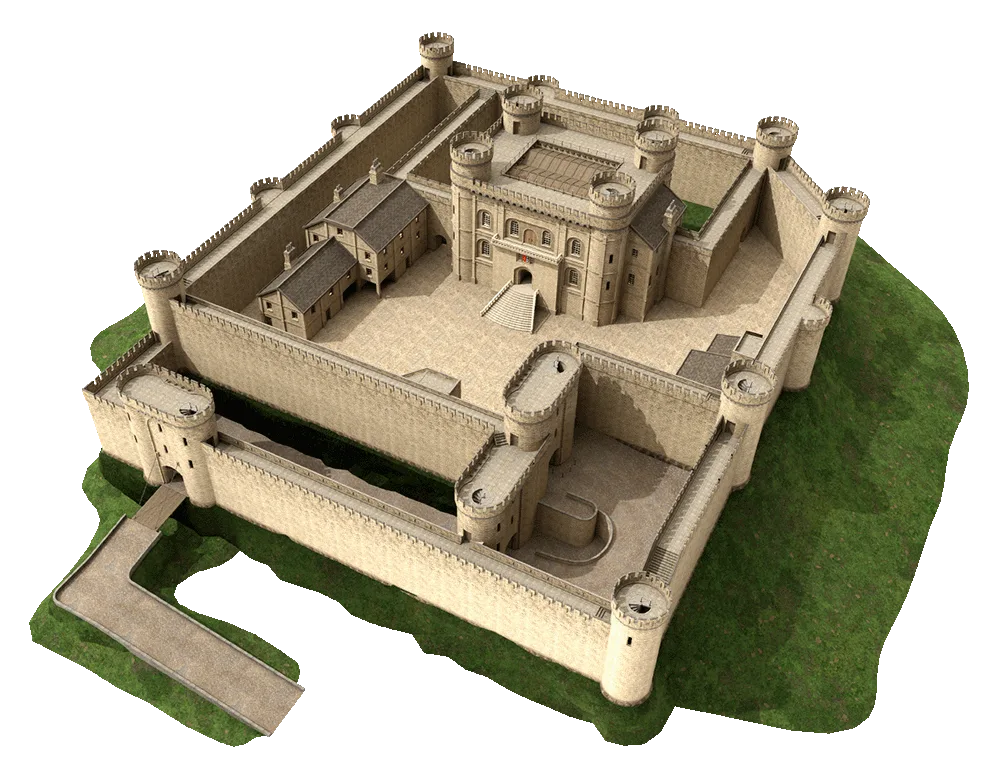
领取额外独特建筑“中世纪城堡”!只需在游戏内关联 Paradox 账号,即可在“公园与休闲”建造菜单中放置这座城堡。立即注册,或使用现有账号登录。
订阅即表明您同意接收 Paradox Interactive 的资讯和特惠信息。