The World of Darkness Discord
Talk to other community members, discuss the latest products and find your new chronicle.
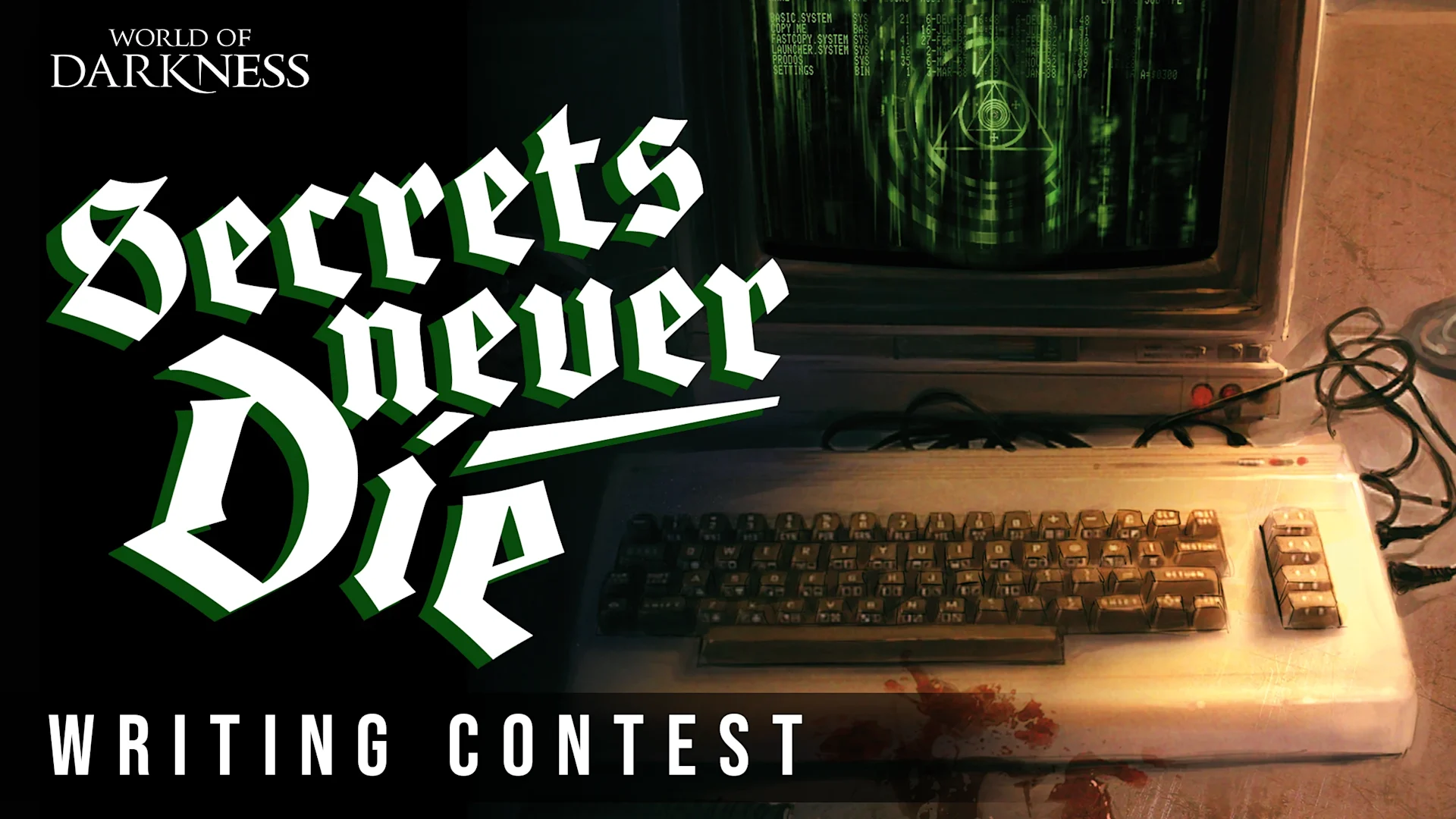
My dear Anna,
If you are reading this, I am already dead.
I have been granted the customary privilege of leaving behind a final testament before my Requiem is ended by decree of the court that raised me. It is an old tradition. The condemned are permitted one last opportunity to explain themselves before history decides who they were. Among the Kindred, a name outlives the body that carried it. What is written tonight is what remains of me once the ash settles. There is a law older than most princedoms: no Kindred may keep watch over the blood they left behind. It exists for good reason. History has never been particularly interested in accuracy, but I no longer have the luxury of waiting for it to catch up.
Those who judged me believed they understood what I had done. They examined my actions with admirable diligence. They assembled witnesses. They compared accounts. They reached conclusions. They were not entirely wrong. They were wrong about the one thing that mattered.
I never drank from you.
Nothing that follows will persuade those who condemned me. It was never written for them. This letter cannot return the years I lost with you nor undo the pain my choices caused. But it can do one thing: tell you the truth I have carried through every passing year, as I know it.
I know what my absence looked like from your side. A father who disappeared. A man who chose distance when his daughter needed him most. You may even have believed I had forgotten you. I had not.
I carried a Hunger that could not be reasoned with or ignored. It demanded discipline. Discipline is learned. Control is chosen. I chose it. Distance was the only protection I believed I could offer you.
Long before any of this, I believed a man is defined not by what he is capable of doing, but by what he refuses to do. That conviction survived everything that followed. I spent decades mastering restraint, learning to live beside the Hunger. Despite everything I learned, I remained capable of making mistakes. I was never mistaken about one thing.
I never drank from you. * * * I remember your fifth birthday more clearly than I remember many years of my own life.
I have lived through decades of darkness, yet I can still picture the light from the candles on your cake reflected in the window of your home. You were so small then. Your world still revolved around simple things: a birthday cake, a handful of presents, people who loved you, and the certainty that those people would always be there. I watched from outside. I know how that sounds. For six years I stayed away. People imagine accepting the Embrace was the challenge. It was not. The challenge was accepting that the person I loved most had become the one person I could never permit myself to endanger.
When I finally convinced myself that I could be trusted, I allowed myself one exception: Your birthday.
I brought you a gift. Nothing extravagant. Nothing capable of replacing the years I had lost. I no longer remember what it cost, but I remember choosing it carefully. I wanted to leave behind something that would make you smile, even if you never knew who had placed it there.
When the house became quiet, I entered. I intended to stay only a moment. I did not want to wake you or your mother. I wanted only to see you close enough to know that you were safe.
Your room was exactly what I expected. A child's room, filled with the small evidence of a life that had continued without me. I remember standing beside your bed and brushing a strand of hair away from your face. Then you moved, not enough to wake, only enough to make me think you were dreaming. I remember the instinctive fear that seized me. Every parent knows that moment, when something seems wrong and there is nothing to do but wait. Then your breathing settled, your body relaxed, and I remember the relief that followed. I pulled the blanket back over your shoulder after it had slipped down, placed the gift beside your bed, and quietly let myself out.
The visit lasted only a few minutes. I returned to the life I had chosen convinced I had done the right thing. * * * I returned the following year.
What troubles me is how much easier the decision became. I was stronger. I understood my limits. I trusted my judgment. When I arrived at your home that night, the fear I had carried with me was gone. The years had taught me how to become a shape the eye slides past: I knew how to move unseen. I knew how to remain unnoticed.
You were asleep, exactly as I had hoped. I sat beside your bed for a while, listening to the slow rhythm of your breathing. I remember brushing a strand of hair away from your face. You did not stir once. Children are often tired after birthdays. Too much excitement. Too much sugar. Too many hours awake.
I was standing at your bedroom door with my hand on the frame. I had stayed longer than I intended. Quietly, I let myself out. * * * Years passed. At first, I returned only on your birthday. Later I came whenever you needed someone watching over you—after illnesses, difficult weeks at school, or nights I saw you crying before the lights went out.
One night I found myself standing in your room with no particular purpose.
Your room changed a little over the years. Toys became books. Stuffed animals became jewelry. The child disappeared little by little, replaced by the woman you would become. Posters of bands I had never heard of covered walls that had once been painted in softer colours. A bottle of vitamins on your nightstand beside a book I distinctly remembered choosing years earlier. A long-sleeved shirt usually rested over the back of a chair beside a pile of unfolded laundry.
That was when I noticed the gifts.
Books. Small pieces of jewelry. Music boxes. Framed photographs. Trinkets I had long since forgotten buying. They had accumulated without my ever realizing it. Every shelf held some quiet reminder of a birthday, a Christmas, or an ordinary evening when I had convinced myself a small gift might somehow compensate for my absence.
I looked around your room and realized those objects had become part of your life as naturally as if they had always belonged there. I had not abandoned you. In my own way, I had remained your father. * * * You moved into your first apartment.
I remember the maple tree across from your building. It was older than the apartment itself, its trunk twisted by time, with a large knot where pigeons nested every spring. I watched from there often enough that the changing seasons became another way of measuring your life. During the summer its leaves concealed me. In winter the bare branches offered no such courtesy.
Before long I knew your routine. I knew when your shifts ended, which evenings you arrived home later than usual, and how long the lights remained on before you finally went to bed. A father notices when something changes.
One evening a man leaving the building looked up and asked what I was doing there. I told him he could forget he had seen me and that it was time for him to go home. It was easier now than it once was. Making someone set aside what they'd seen is a small mercy of what I've become.
He apologized, turned around, and walked back inside.
Years passed. The superintendent eventually cut down the maple tree. The roots had begun lifting the sidewalk, and there was no practical reason to keep it standing. Yet I remained across the street long after the work had finished, unable to leave. It had become the place from which I watched over you. * * * Not long afterward, you bought your own house. I remember feeling proud. You had built a life entirely your own. Every father hopes to see his child become someone capable of standing on their own.
But by then I had begun noticing something I could not explain. The child I remembered had laughed easily and thrown herself into everything she loved. Slowly, that brightness seemed to fade. There were evenings when I found you sitting quietly, staring into nothing, as though searching for something you had lost. You wondered what had happened to yourself. I wondered the same thing.
One evening I found you asleep on the couch, still wearing your work clothes. The television was playing to an empty room, your dinner sat untouched on the coffee table, and your shoes were still on your feet. You looked exhausted.
I did the sort of small things fathers do when their children are too tired to care for themselves. I turned off the television, carried your dinner into the kitchen, covered you with a blanket, and remained beside you for a while before leaving.
* * * The hospital visits became more frequent. At first, they were separated by months. Then by weeks. Eventually they became ordinary enough that I no longer regarded them as exceptional.
I had never liked hospitals. They are places built around waiting, and becoming what I am did nothing to change that.
Still, I came. One evening, you had fallen asleep before I arrived. The room was quiet except for the steady rhythm of the heart monitor beside your bed. Your dinner sat untouched on the tray near the window, and a book rested open across your blanket where sleep had interrupted whatever page you had been reading.
I adjusted the blanket around your shoulders and sat beside the bed until the nurse entered. She stopped when she saw me and asked who I was. I told her I was your father. She looked at your chart, then back at me. For a brief moment I expected another question. Instead, she nodded, apologized for disturbing us, wished me a pleasant evening, and quietly left the room.
The physicians were meticulous. They tested and measured everything. They named every deficiency your body carried. Iron. Hemoglobin. Fatigue. Every treatment helped for a time. They wanted to understand why your body recovered only to decline again. They compared test results, revised treatments, sought second opinions, then third. They could explain each symptom separately, but never all of them together.
I accepted that as one more example of life's unfairness.
The nurse was not the only one who noticed. A guard mentioned, months later, a visitor he could not quite place. An orderly remembered finding me at your bedside after hours and could not explain why he had let it pass. Alone, none of it meant anything. Together, it became a pattern, and a pattern is the one thing my kind cannot survive. * * * There is little left to say.
I have spent this entire night placing these memories in the order I believe they belong. You deserve to hear the account from the only person who has lived it.
The court concerned itself with my actions. That was its duty. Mine is only to leave you with the reasons for them.
I know there are decisions I cannot undo. I know there are years I can never return to you. If I were once again standing outside our home on the night I left, knowing everything that followed, I would still leave. I believed then that distance was the only way to protect you. I believe it still. Everything that followed—every birthday I watched from a distance, every gift I left behind, every visit I made believing I could remain part of your life—began with that decision.
If, in the years ahead, you hear stories about me—and I have no doubt that you will—I ask only that you remember this before you believe any of them: whatever else I became, I never stopped trying to be your father.
I know that I did.
I never drank from you.
Talk to other community members, discuss the latest products and find your new chronicle.







订阅即表明您同意接收 Paradox Interactive 的资讯和特惠信息。