The World of Darkness Discord
Talk to other community members, discuss the latest products and find your new chronicle.
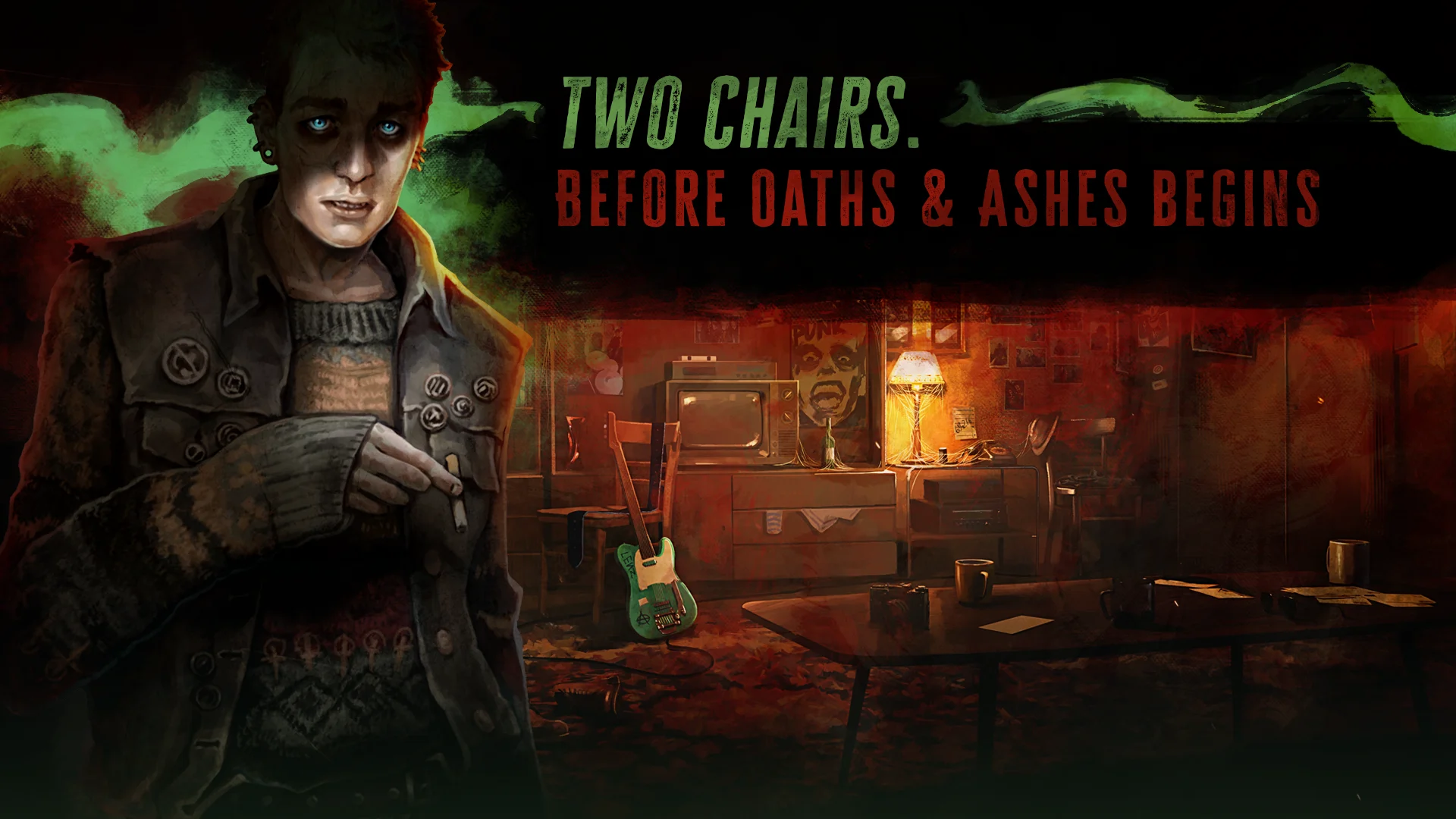
Set before Oaths & Ashes. The paint is coming off the wall in sheets, and under the gray there’s green, and under the green there’s gray again, and I know that wall. I’ve counted every crack in it. So it’s 1982, and I’m twenty-three. Wait, no. 1982 is a long way back, and I’m a long way from twenty-three, and if I am seeing that wall, then I’m high again. Again. Not that I ever stopped. My cheek is on the concrete, and I’m breathing, sort of. Faking mortality. I haven’t needed to since before my father’s hair went gray, and I do it anyway, and coming down I do it harder, and sweat beading on my lip, and blood pounding in my ears like a fist on a cell door. My father would have called it a side effect. Lifelike. Elbows. Knees. Wall. Focus, Lenz. This is Hohenschönhausen. The Stasi prison that wasn’t on any map. Now it’s a museum. They give tours. The tour comes down this corridor and stops at my old cell, and the guide says what the cells were for and how long a man could be kept in one. People take pictures. They eat chips or sandwiches while somebody tells them about breaking bones. The Stasi kept me in this cell for nineteen months. The light stayed on all night, and I slept on my back with my hands outside the blanket, where the eye in the door could see them, and in all that time I never saw another prisoner. Two chairs against the far wall, right where the old ones used to be. A man sits in each. I carried the first chair in myself. I carried it down the stairs with its back legs knocking on every step. My friend Sang carried the second. He came in behind me, the camera hanging from his neck as it always did, set the chair down, and lined it up with the first one, and stepped back to check the frame. The piece needs to be whole, he said. He said that over every half-empty frame I ever saw him look at. I laughed every time. “Took you long enough,” I tell him. “Give me a hand with these two.” The answer comes back in my own voice. We’re all dead, Lenz. Across the room, my father draws a breath. A fresh scrape marks the back leg of the second chair, and a splinter from it is lodged under my thumbnail. I remember Sang carrying that chair in. So where were my hands? I press my thumb to the scrape and wait for the room to stop moving. When it does, the splinter is still there. On the left sits the Stasi officer who questioned me here. A stake sticks out of his chest. He can’t move, and he can’t talk. His eyes stay open. I get to my feet and leave him staring at the place where I was lying. He was old before somebody Embraced him. Eighty-something and dying in a hospice in Lichtenberg, and somebody fed on him, went too far, and then gave him an unlife he didn’t ask for. Three weeks later, he’s here with me. A True Kindred. Getting him out of the hospice was easy. I stood across the street with my hand in my jacket, waiting for somebody to ask for papers. Nobody did. I took him down the stairs, his arm over my shoulder, his coat buttoned wrong. On the landing I downed the contents of a small vial. Mist gathered around us. The night porter came up the stairs with his keys in his fist and stopped a few steps below us. “Is that smoke?” he asked. I held the old man against me. The porter backed down a step and reached for his radio. I walked the old man right past him while he called for the nurse. In the cell, the stake was still in my jacket, and he could still talk. I tied his wrists behind the chair to give my hands something to do while I decided what to do with him. The rope wouldn’t have held him if he’d understood what he was. I kept him hungry and stood by the door. “Nurse,” he said. “Water.” He looked toward the door after he said it. In 1982 he could’ve called someone through it and left me here. Nobody came now. I let him wait for his water. “You have a file now,” I told him. “Listen to this part.” “Your people lost Berlin,” I told him. “No Prince in Berlin. The Camarilla sends its letters from Paris. Diron, the Baron, leads the Black Rose. Do you want to hear more about your new vampire brothers and sisters?” “Then there’s Zahir-Kara, and Tuyet, and Volkhv with his Russians, and the Wild Chase, who held Lichtenberg until this week.” His wrists strained against the rope. He could still do that then. When I was twenty-five, I needed papers to cross the city, and I held them out before the guy even asked, stamp facing him. The Wall came down. The booths went with it. I still stop before I cross. I have to know which gang holds the ground ahead and whose name will get me past whoever’s watching. The officer asked what I wanted. “Nineteen months,” I told him. “Spring of ’82. You put the lamp in my eyes because I couldn’t stop shaking. Couldn't. I told you I couldn't. You wrote malingerer, and then uncooperative underneath it. I don't know how many times I told you.” I gave him the corridor, the bucket, the color of the blanket. “Which year?” he asked. I said it again. I named the wing. “Which wing?” he said. “We had hundreds like you.” He hauled at the rope, and the chair came with him. I drove the stake at his chest. The point hit a rib and skidded, and for a moment, his face was right up against mine. He still didn’t recognize me. I pulled the stake back and drove it between his ribs and into his heart with all my weight. He stopped. The chair went on sliding across the floor. I kept my hands on the stake until the chair stopped too. I take my hands off the stake. The same wood through my heart might put me on the floor. I’ve been a thin-blood since 1986. He’s been undead for three weeks and already has the teeth and the Beast. I want what he has. I hate him for having it. He doesn’t even know what he has. The one on the right is breathing. He’s mortal. Ninety-one years old. I tested the knot when I tied it. “Are you comfortable, Vati?” My father looks at me. I wait for him to say my name. He looks at my collarbones instead. “You have lost weight, Lorenz,” he says. He reaches until the rope stops him. I put my wrist in his open hand. His hand is warm, and smaller than I remember. Two fingers settle beneath my thumb. His lips move with the count. The skin under his jaw shifts when he swallows. I watch for it to happen again. I haven’t fed tonight. I could pull him forward by the hand that’s holding mine. “Your pulse is irregular,” he says. Yeah, I’m wholly irregular. He said irregular when I was fourteen. He said it at fifteen, when I had to lay my shirt on the kitchen table to work the buttons through the holes. A tin sat on that table. Supplements, he told me. Take them with food. He told my mother they were vitamins. She sat facing the wall while I swallowed, crying without a sound. Years later I found a doping regimen for Olympic athletes in the medical file he kept on me. He wrote down the shaking and changed the dose. “Are you taking them?” he asks now. As a boy, I never took them with food. I wait for him to look at my face and figure it out. There’s nothing for me in his eyes. I take my hand back. “Results,” he says. I can give him results. Nineteen months in this place. Undead since 1986. A body that still gets hungry and won’t ever become the real deal, the deal the Stasi-Schwein got by accident. I tell him enough of that to see if anything catches. “Good,” he says. He’s looking at the wall. “Your son died in 1986,” I tell him. “You just said my name, and you had my hand in yours, and I'm standing right here. Lorenz. It's me, Vati.” “Hallucinations,” he says. “We saw those at the higher doses.” We. My mother covered her mouth when he set the tin on the table. I don’t remember her telling me not to take the tablets. Maybe she did. It was a long time ago, and there’s no Ashe that I can take to find out. He asks for a pill. I took the tin from his nightstand when I brought him here. One left. I shake it into my palm. “One,” I tell him. His eyes follow my hand to his mouth. I put the tablet on his tongue and hold the cup while he drinks. He spills water down my fingers and thanks me. “Irregular,” I say. “I have to go,” I tell my father. “I’ll be back before morning.” “For what?” he says. “I don’t know yet.” I take the staked man over my shoulder. He weighs less than he did in the hospice bed, or I’m stronger than I thought. At the service passage, I lay him on the folding cart I hid there earlier. One wheel catches in a split in the floor. I pull, and the squeal runs down the corridor. Nobody comes. Three crows sit on the fence by the side gate. Watching. Judgmental. I don’t know much about birds, but I’ve never seen them waiting like that. One shifts its feet as I open the back of the borrowed van. A kid sits under the shelter at the tram stop. Hood up. No tram for another hour. He turns his head to watch me load the cart. The city has a story about a Nosferatu living beneath the old bunkers, with birds above him and half the people on the street reporting back. I don’t know if he exists. The kid at the stop exists. But tonight I wouldn’t swear to it. “Put it in the file,” I tell him through the glass. He can’t hear me. I drive away. On Köpenicker Straße, the loose cart wheel rattles against the van floor over every bump. The kitchen off Görlitzer, where I cook my drugs, has a bricked-up window. The extractor, stolen from a kebab shop, rattles over the burners. On the shelf are jars I labeled twelve years ago. All the ashes I’ve used in those years came from Sig. The man on the cart is the first one I’ve brought here myself. I take a dose of Sig’s Ashe from the jar beneath the bench and sit with it under my tongue. The shaking eases. I hold my hands out over the table and watch them. The True Kindred know where to find me when they need something. Need a runner, need a cook, need someone to blame. They call it the Beast when they hurt somebody. It’s not my fault, not my fault; I can’t control it, and now be my slave, be a good Duskborn. Sure. It was under their ribs, and it got out. Got out and broke your jaw, for instance. I reach under my own ribs and find the familiar absence. I could turn around. I could leave him staked on the cart and go back to my father. I lift his chin and bend toward his throat. I could drink him dry and keep going. Be one of them, with the teeth and the Beast. Which wing, he said. I let his head drop. Instead, I wheel him out into the concrete yard. I drag a sheet of corrugated iron off the wall and lay it flat. I took his service card from the hospice bedside drawer. The photo has split across one eye. He kept it after the service was over. I cut the coat off him and left it on the cart, buttons still fastened wrong. I lay him on the sheet metal and put the card next to his hand. The stake stays in his chest. I strike a match and hold it to his shirt sleeve. The cloth catches. I stay beside him until the heat drives me back. His hands lie burning on the metal. Maybe he feels it. The fire on his hands. For every finger he broke during my interrogation. For every nail he pulled when I wouldn’t give him the names. Shit. I should’ve hurt him before I drove the stake in. You should’ve tortured him first, Lenz. The camera clicks behind me. I turn. Sang’s standing by the cart with the strap around his neck. I don’t remember him getting into the van. When the fire goes out, a scrap of the officer’s sleeve lies in the ash. I touch the edge of the metal and wait. Then I scrape his ashes out of the grooves into a tin and carry them inside. I measure out the ash and set the crucible over the burner. Nurse, he says, somewhere behind my eyes. His hands on the metal. The ash cakes against the crucible. I turn the gas up. A black crust forms around the edge, and, underneath it, something keeps moving. I lean closer. What the…? The crust splits. Behind the burner, a shadow draws itself up the wall, bent under the shelf. I move my hand away from the flame. The shadow stays where it is. Then it turns. There’s a Shard among the jars. Its head presses against the shelf, and its arms hang down over the edge of the bench. The flame shows through its body. I stand with my hand on the gas tap. One of its arms lifts toward mine. I turn off the gas, and it catches my wrist. I strike at it with my free hand and knock the jars off the bench. Glass breaks against my shoes. Its claws have gone through the sleeve. I can feel them in my arm. I pull back, and it comes with me, dragging itself over the edge, and I hit the wall with it hanging from my wrist. Don’t do it. Not again. The old Stasi lamp is in my eyes. My hand is flat on the officer’s desk, his palm pinning it there. My file lies under his elbow. I pull, and he leans harder and tells me to stop moving. “Names,” he says. I’m telling him I don’t know. I’m twenty-three, and I can hear myself begging, and he has my little finger bent back against my hand. He lets it go and takes the next one. Sang. Help me. Don’t let him. He stands in the kitchen doorway, camera to his eye. There’s glass under my knee. Blood is running into my cuff, and the thing still has my wrist. I strike it against the bench and wrench my arm free. The sleeve tears. I get through the back door and across the yard, hand against my chest. Something hits the door behind me. I drive with my hurt hand on my knee. My father is in the cell, and the cup is by his foot, and I keep seeing him bent over in the chair, reaching for it. I take the road back to Hohenschönhausen. Less than an hour to sunrise. I drive past a bakery with its shutters going up. The kid is gone from the tram stop. But the crows. The crows have stayed on the fence, waiting for me. They still haven’t made up their minds about me. I leave the van two streets away and go in through the gate. I told my father I’d come back. I’ve come far enough to keep that part. He sits where I left him. The water is by his foot. He asks for his coat, and I put my jacket around his shoulders. I hold the cup while he drinks. Water runs down his chin into the collar. “I’ve got the van,” I tell him. We’re going back. I get behind the chair and undo the knot. The rope sticks where I’ve bled on it. He brings his hands together and rubs them. I come around to help him up. He looks at my wrist. “Are you taking them, Lorenz?” I stand with my hand out. He reaches for it, and I draw it back. “You’re shaking,” he says. I take his hands, press them back against the chair, and pass the rope around them. He tries to turn his wrist in my grip. I hold it and pull the rope tight. He asks what I’m doing. I pull it tighter. At ten, the guide shows up. Security calls the cops. They’ll ask his name and write it down. They’ll ask who brought him. He might tell them I died in 1986. The cops can chalk it up to his age. If the report reaches the people who know what I am, his age won’t help me. The man with the camera used to wait for people to walk out of a frame before he took a picture. I catch myself turning toward the doorway to see if he’s there. My father looks at the empty chair and asks if someone else is coming. I tell him I don’t know. Outside there’s one crow on the wire, and the sky is turning the color that tells me I need to be indoors. Somebody at the tram stop saw the van. The grit of Ashe still clings to my tongue, and the crash has gotten into my fingers. I put my hands in my pockets and walk to the van. There’s blood enough in this city to keep me going long after my father’s dead. A hundred years, maybe. I get into the van. The man with the camera is already beside me. We’re both dead, and he still follows me. My best friend.
Talk to other community members, discuss the latest products and find your new chronicle.






By subscribing, you agree to receive news and special offers from Paradox Interactive.